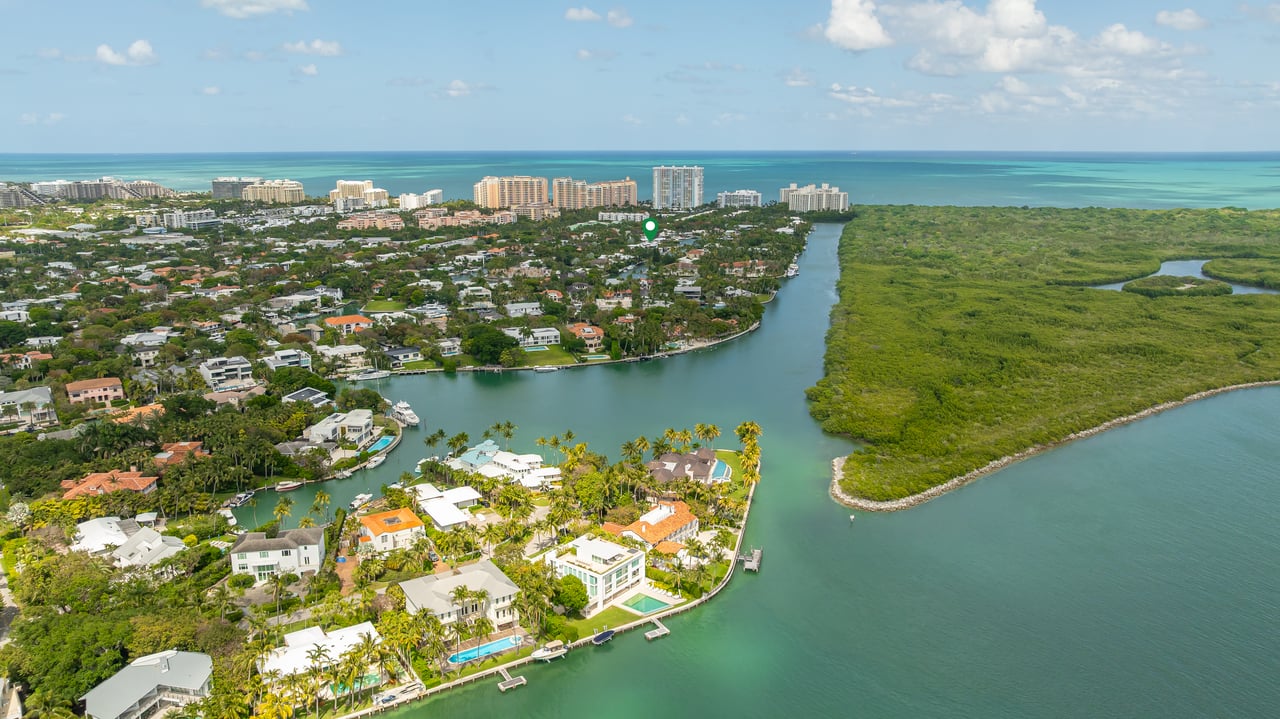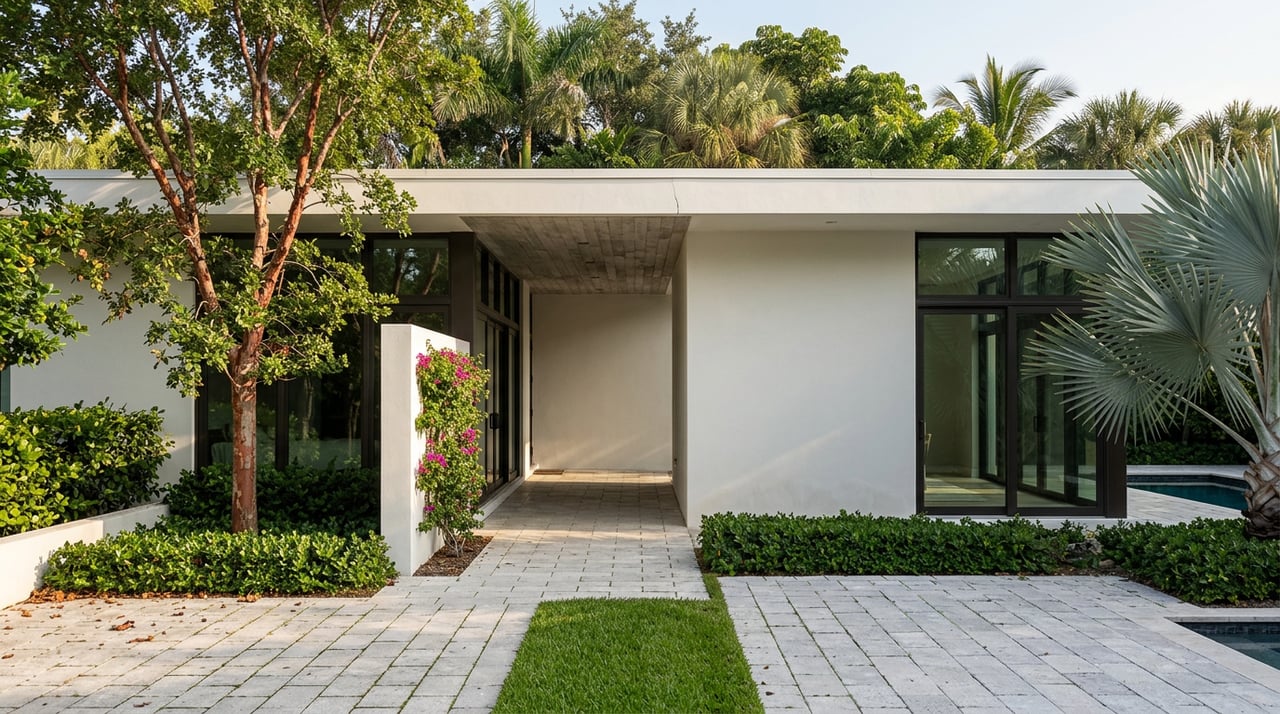
A buyer or owner planning to update an older home on Key Biscayne usually starts with the wrong question. They ask what a kitchen gut, a second story, or a full interior renovation will cost. The number that actually controls the project is a different one: what the existing structure, not the land beneath it, is worth on paper before a single permit is pulled. Cross half of that figure in permitted work, and the scope of the project changes by law, not by preference.
This is not a Key Biscayne-specific statute. It is a federal floodplain rule that happens to land with unusual force on this particular island, because Key Biscayne stacks its own permitting layers on top of it, and because a meaningful share of its older housing stock predates the paperwork the rule depends on.
The Paperwork Predates the Renovation
The Village of Key Biscayne has been collecting FEMA Elevation Certificates from home builders and developers since 1995, as a standard part of its permitting process. That means any home built before 1995 that has never gone through a substantial improvement or suffered flood damage may not have a certificate on file at all. The Village's own guidance for owners in that position is direct: hire a surveyor, or track down the prior owner's copy.
An Elevation Certificate is not a formality. It is the document that establishes where a structure's lowest floor sits relative to the Base Flood Elevation for its zone, and it is the reference point every later calculation depends on. For a home with no certificate on record, the renovation conversation cannot really start until that gap gets closed, which means the first real cost of a project on an older Key Biscayne lot is sometimes a survey, not a contractor's bid.
The Number That Actually Runs the Clock
Once the certificate question is settled, the renovation runs into FEMA's Substantial Improvement standard, sometimes called the 50 percent rule. Under the federal regulation, if the cost of a renovation, addition, or repair equals or exceeds half of the structure's market value before the work began, the entire building must be brought up to current floodplain compliance. That typically means elevating the lowest floor to Base Flood Elevation, regardless of whether the original project was a kitchen remodel or a full-scale rebuild.
Two details make this rule sharper than it first appears. The threshold is calculated against the structure alone, with land value excluded entirely, so a valuable lot with a modest house on it has far less room to renovate before tripping the rule than the sale price would suggest. Building departments in Florida also tend to track this cumulatively over a rolling window rather than project by project, watching for owners who split a single renovation into phases specifically to stay under the line. A kitchen this year and a primary suite addition next year can still get added together if a department decides they were really one project.
Here is the shape of that math, using round figures to illustrate the mechanism rather than any specific address:
| Structure value (land excluded) | Renovation spend that stays under the threshold | Spend that triggers full compliance |
|---|---|---|
| $400,000 | up to roughly $199,999 | $200,000 or more |
| $600,000 | up to roughly $299,999 | $300,000 or more |
| $900,000 | up to roughly $449,999 | $450,000 or more |
The takeaway is not the specific dollar figures. It is that the ceiling moves with the appraised value of the structure, not with what an owner intends to spend, and an owner who assumes their budget sets the scope has the relationship backward.
Why the Slab Usually Loses
Once a project crosses that line, the practical question becomes whether the existing foundation can even be brought into compliance. For many older Key Biscayne homes built slab-on-grade, elevating the structure to meet current Base Flood Elevation is often not cost-effective, and in some cases not physically workable at all. That is frequently the point where a renovation plan quietly becomes a demolition and rebuild plan, not because the owner wanted a new house, but because lifting the one they have stopped making sense on paper.
Key Biscayne adds its own layers on top of the federal rule. The island sits within Florida's High-Velocity Hurricane Zone, and beachfront parcels carry additional Coastal Construction Control Line provisions that require Florida Department of Environmental Protection review in addition to the Village's standard building permits. Hurricane impact ratings and flood compliance are treated as central to nearly every construction project on the island, not an edge case reserved for waterfront estates. A homeowner comparing a renovation quote against a teardown quote should assume the teardown path carries its own review schedule, separate from the Village's building department, if the lot touches the coastal construction line.
What Counts Toward the Threshold, and What Doesn't
Not every dollar spent on a property counts toward the 50 percent calculation. Understanding the difference matters before a scope gets finalized.
- Counted: structural renovations, additions, interior rehabilitation, and repairs to storm or flood damage, all measured against the structure's value alone.
- Not counted: the value of the land itself, along with separate site improvements like pools, docks, fences, and landscaping.
- A narrow exception exists for corrections required to fix existing health and safety violations, which some jurisdictions exclude from the calculation even when they are expensive.
- A separate exception exists for structures with recognized historic designation, but it requires written approval from the Florida Division of Historical Resources confirming the work preserves that status, which is a different process than a standard renovation permit.
None of these exceptions are automatic. Each one depends on documentation an owner needs to have ready before the building department makes its determination, not after.
What This Means at the Closing Table
An Elevation Certificate is not just a renovation prerequisite. It is also required to insure a property under the National Flood Insurance Program, and in most South Florida counties, a sale cannot close without one on file. For a buyer evaluating an older Key Biscayne home with renovation potential, or a seller listing one, the certificate question deserves attention well before the inspection period starts.
A practical sequence for either side of that transaction looks like this:
- Confirm whether an Elevation Certificate exists for the property, and if it predates 1995, treat that as a gap to close rather than an assumption to make.
- Request the structure's most recent appraised value separate from the land, since that number sets the renovation ceiling under the 50 percent rule.
- Ask for the property's permit history over the past several years, since prior work can already count toward a rolling threshold before a new project even begins.
- If the lot touches the Coastal Construction Control Line, confirm whether a Florida DEP review has already been initiated or will be required, and build that timeline into any renovation or rebuild schedule.
Miami-Dade's broader luxury market gives some sense of why this question is coming up more often. Single-family sales above one million dollars across the county rose sharply in the first quarter of 2026 compared to the same period a year earlier, according to Miami Association of Realtors data, and the Islander News reported in its own coverage of that quarter that brokers active on the island described steady demand for buildable lots as land values climbed well past what many owners paid decades ago. On an island where land is the scarce asset and older housing stock is common, more buyers are running directly into the calculation this piece describes.
FAQ
Does the 50 percent rule apply to storm damage repairs, not just voluntary renovations? Yes. The rule applies whether the triggering cost comes from a chosen renovation or from repairing damage after a storm. The calculation treats both the same way once the cost crosses the threshold.
Can a renovation be phased to stay under the threshold intentionally? Technically the work can be sequenced, but building departments track cumulative permitted costs over a rolling period, and phasing a project specifically to avoid the rule can be flagged and reclassified. Ask the Village's building department directly about how they treat sequenced work before assuming a phased plan will hold.
Does bringing a home up to Base Flood Elevation help with anything beyond compliance? Elevating a structure to current standards can reduce flood insurance costs going forward, since the National Flood Insurance Program prices policies in part based on how far a structure sits above or below the required elevation.
A renovation or rebuild decision on Key Biscayne rarely comes down to design alone. It comes down to a structure's appraised value, the paperwork trail attached to it, and how much of that trail already exists. The Paulie Group works with buyers and sellers through exactly this kind of due diligence before an offer gets written, not after. Contact us to talk through what a specific property's history actually allows.