Scroll through the current listings at Murano at Portofino, the triple-tower waterfront address at the southern tip of South of Fifth, and one line does more work than any square footage figure or view description. Attached to a unit currently on the market: seller paid the building's special assessment. It reads like a footnote. It is closer to the entire pitch.
That sentence only exists because Murano's board spent the past few years working through one of the larger special assessment cycles in Miami Beach, and by 2026 it has become something sellers lead with rather than bury. Understanding why that line carries weight, and why it applies to a building most people would not call old, says more about what you are actually buying in Miami Beach than the price per square foot ever will.
Twenty Years Old, Not Fifty
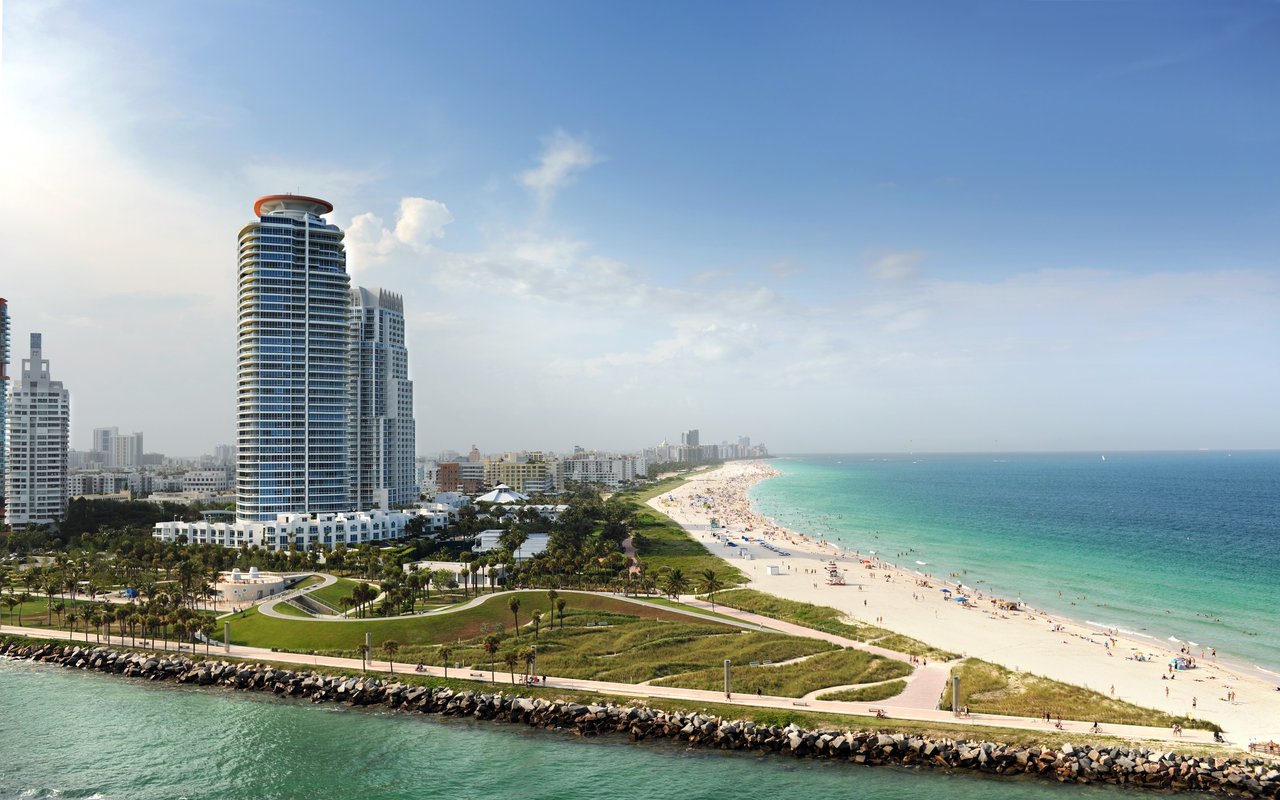
Murano at Portofino is not a relic. Related Group and Thomas Kramer's Portofino Group built it in the early 2000s as a resort-style complex on 4.5 acres of bayfront land, with three glass towers, a private beach club, tennis courts, and direct water views of Fisher Island and the Miami Beach Marina. Units there are currently asking between roughly $5 million and $11 million. This is not a building anyone would flag as a candidate for deferred maintenance based on its birth certificate alone.
That is exactly the point. The story most buyers carry into a Miami Beach search is that risk scales with age, that pre-1990s concrete is where the trouble lives and anything built after 2000 is basically fine. Murano is twenty to twenty-five years old, sits in one of the most desirable micro-neighborhoods on the island, steps from Joe's Stone Crab, Carbone, and Prime 112, and it has still worked through close to $60 million in special assessments since 2022. Age was never the operative variable. Reserve history was.
The Bill That Came Due Twice
The first phase, launched in 2022, tackled facade restoration, stucco, balcony repair, and waterproofing against water intrusion, the kind of work coastal concrete eventually requires regardless of how nice the lobby looks. Bundled into that same assessment was a renovation of the beach club, a discretionary lifestyle upgrade riding alongside mandatory structural repair. That pairing matters, because the assessment notice can combine required repairs with amenity improvements.
The Real Deal reported that in December 2024, owners approved a second phase of nearly $27 million, part of a combined total approaching $60 million. That second round covered a $17.6 million pool deck rebuild, $2.9 million in elevator modernization, $2.9 million for lobby renovation, and $1.5 million allocated to Structural Integrity Reserve Study funding, the reserve account that Florida's Division of Condominiums, Timeshares, and Mobile Homes says qualifying associations must fully fund. Per-unit costs for that phase ranged from about $66,000 up to $322,000 for a penthouse, payable a quarter up front with the balance amortized over eighteen months and a balloon payment at the end. On top of that, a 3,365-square-foot three-bedroom unit at Murano was carrying regular monthly dues of roughly $3,400, before either assessment.
That combination of essential structural work and elective upgrades, both charged to the same owners on the same timeline, is the actual mechanism behind a lot of Miami Beach's post-2022 sticker shock. It is not always a story about neglect; even a well-maintained building can face a large bill when major work comes due.
Not an Outlier on the Block
Murano is not an isolated case study. Building consultants who worked on the project described its assessment scale as consistent with other luxury properties in the immediate area, specifically naming Portofino Tower and Continuum South Beach as facing similar work. That is the part worth sitting with. This is not one poorly managed association among well-run neighbors. It is a cluster of comparably aged, comparably resort-styled towers built in the same window, all hitting the same reserve-funding reckoning at roughly the same time, because they all share the same regulatory trigger: Florida's post-Surfside Structural Integrity Reserve Study law, which stripped away the option to vote down full reserve funding once budgets adopted on or after January 1, 2025 came into effect.
What the Premium on New Construction Is Actually Buying
Set Murano next to what is currently selling as new construction on the same island and the price gap starts to make more sense as something other than pure amenity envy.
Building | Era | Location | 2026 asking range | Structural liability |
|---|---|---|---|---|
Murano at Portofino | Early 2000s | South of Fifth | $5M to $11M | Two assessment phases since 2022, roughly $60M combined |
Five Park | New delivery | South Beach, near South Pointe Park | $1.5M to over $10M for penthouses | Reserves funded from initial sales, no legacy assessment |
Faena House | Delivered 2015 | Mid-Beach | $3M to $25M-plus | Newer high-rise, no deferred structural backlog |
A buyer paying $3,000-plus per square foot at Faena House or committing to a high floor at Five Park is not only buying finishes and a name. Part of that premium is the absence of a liability, the fact that nobody is inheriting decades of the building's prior reserve history. Murano's list price looks approachable by comparison. The number that actually determines what you own is the one attached to the association's reserve study, not the one on the listing sheet.
What to Ask For Before You Write an Offer
None of this means older Miami Beach towers should be avoided. It means the diligence has to start earlier than most buyers assume, and it has to focus on paperwork rather than the amenity tour.
- Request the Structural Integrity Reserve Study and confirm the date the association's current budget was adopted. Anything adopted on or after January 1, 2025 cannot legally waive reserve funding for structural components.
- Ask for the milestone inspection status. Find out whether the building has completed Phase 1, or whether findings triggered a Phase 2 investigation, since that determines whether repair costs are already known or still being scoped.
- Ask about current, pending, and anticipated special assessments, including per-unit amounts and payment schedules.
- Separate the line items. When an assessment notice covers both a roof replacement and a lobby renovation, ask the board or property manager to break out what is code-mandated repair versus discretionary upgrade. That distinction shapes how you negotiate.
- If a listing states that the seller already paid the assessment, verify it in writing with the association, not just the listing remarks, before you rely on it in your offer.
Frequently Asked Questions
Does a low monthly HOA fee mean a building is well managed? Not on its own. A modest fee can reflect a building with genuinely low needs, or it can reflect a reserve fund that has not yet caught up to what a completed Structural Integrity Reserve Study says it should be. Ask for the study and the budget adoption date before treating a low fee as reassurance.
Is this only a concern in buildings from the 1970s and 1980s? No. Murano's timeline shows a building from the early 2000s facing assessment totals in the same range often associated with much older stock. A building's age alone does not determine whether a Structural Integrity Reserve Study is required.
What happens if I close on a unit right after a special assessment is approved? The payment schedule is worth clarifying before closing, which is why the written disclosure matters more than the listing description. Confirm directly with the association whether the current owner's obligation has been satisfied or whether it transfers, and get that confirmation in writing rather than relying on a broker's remark.
Murano's paperwork is a useful lesson precisely because it is not a horror story. It is a well-located, well-run building working through a legally mandated reckoning that a lot of its neighbors are working through at the same time. The address on the assessment notice is South of Fifth. The mechanism behind it is statewide. Reading a Miami Beach listing with that distinction in mind, rather than treating the year built as the whole story, is where real diligence starts.
If you are weighing an established Miami Beach address against new construction, or trying to read a building's reserve history before it becomes your problem, Paulie Group can walk through the disclosure package with you before you write an offer, not after.
This article is general information, not legal, tax or financial advice. Consult a qualified professional about your situation.