A buyer touring Coral Gables this summer sees a familiar number on the portals. In early June 2026, Rafael Beltran of the Opes Group at Compass told Miami Today that the single-family median sits near $2.7 million, up roughly 23 percent year over year, with about five months of supply and a 26-day path from list to contract. That reads like a decisive market. It isn't. It's the average of segments that have almost nothing to do with each other, filtered by a governance calendar most buyers only discover after closing.
The number that will actually shape a purchase in Coral Gables is not on Zillow. It's the Thursday morning meeting at 427 Biltmore Way, where the Board of Architects sits down to review paint colors, mailbox placements, window profiles, pool decks, and new construction. That review is the binding constraint on what a buyer's money can do once the deed is signed, and it is the reason certain segments in this market have pulled away from others rather than converged.
The Thursday That Sets Your Timeline
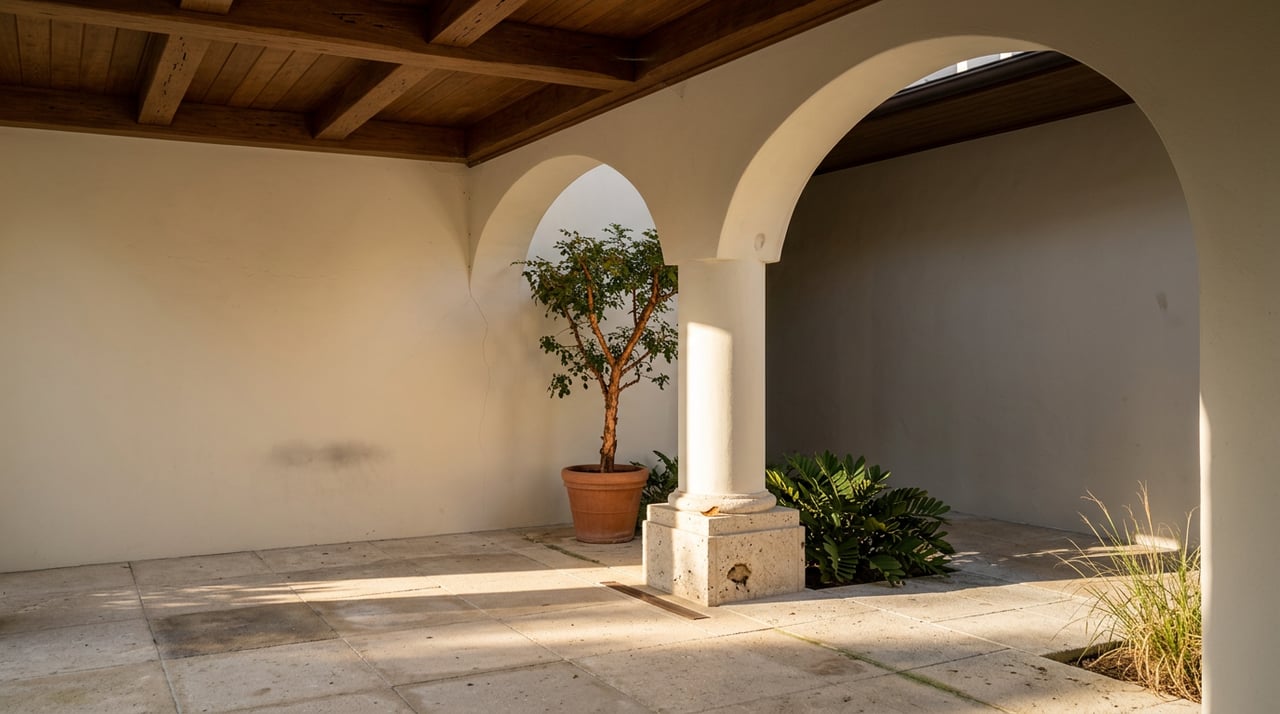
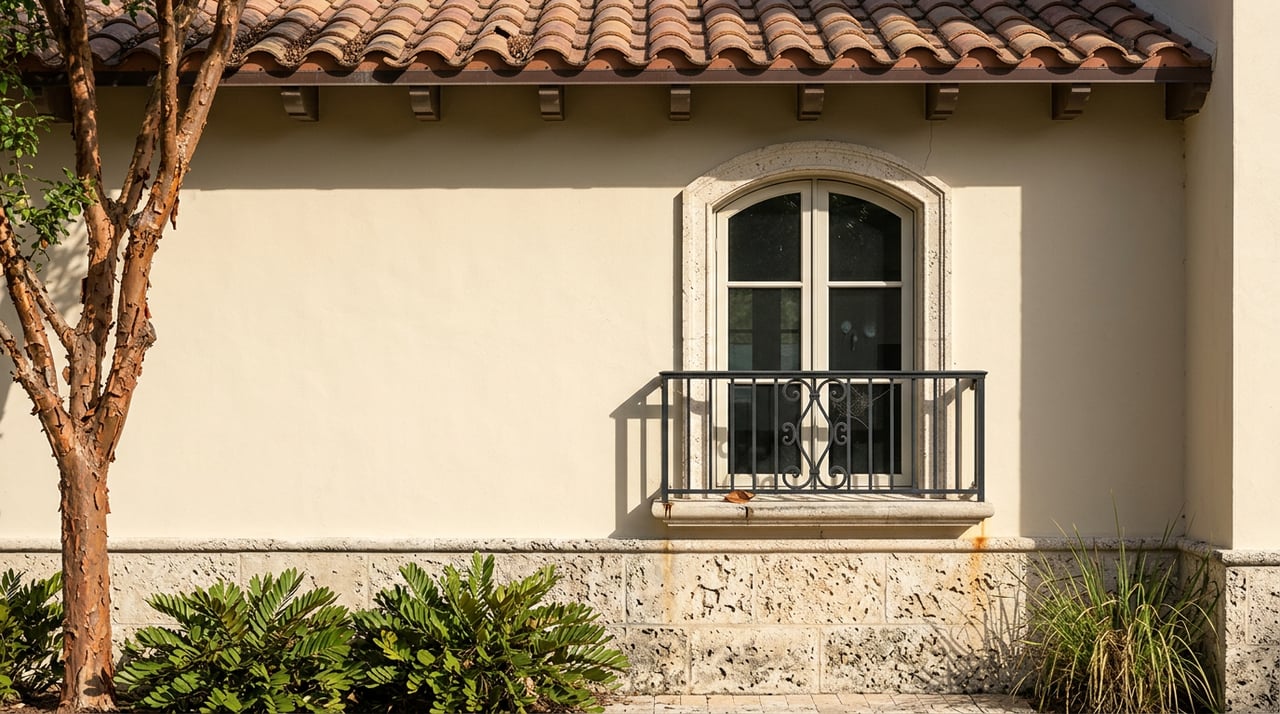
Coral Gables is one of the most tightly reviewed jurisdictions in South Florida for residential exterior work. The Board of Architects meets weekly to consider new residences, additions, pools, signs, roof tiles, and paint. Preliminary and final approvals are both required before a permit is issued, and applicants or their architect must appear at the hearing. Interior renovations remain unrestricted, which is why so many Gables homes carry heavily modernized kitchens behind facades that look untouched since 1928.
The cadence is public and predictable, and the math matters. A single review cycle typically runs three to eight weeks, and substantial projects usually pass through two to four cycles before the board signs off. After that, plan check at Development Services adds another six to twelve weeks for a residential file. A "simple" swap like exterior paint, a window change, or new pavers can consume three to six weeks on its own, since any color change pulls from a city-approved palette of roughly sixty historically appropriate options and requires a physical sample submittal.
For a buyer who is closing in July with an autumn move-in already planned, that timeline is the friction. A teardown-to-slab schedule can lose a full quarter to review before the first excavator arrives. This is not a hypothetical bottleneck. A single July 2025 agenda in the Coral Gables Gazette carried sixteen applications, including new two-story homes proposed at 35 Palermo Avenue, 931 Roderigo Avenue, 524 Mendoza Avenue, 2511 San Domingo Street, and 1915 Country Club Prado. Ground-up development in the established grid is active enough that the board's calendar is the pacing variable for the whole pipeline.
The material palette then narrows the design conversation. Approved exteriors run to stucco, coral rock, brick, barrel tile, wood shutters, and wrought iron. Vinyl siding, asphalt shingle, most standing-seam metal roofs, aluminum railings, and glass block sit outside the approved vocabulary. A buyer who paid for the property assuming a contemporary metal roof or a modern railing system will re-price the renovation or lose it.
What the Median Isn't Telling You
The $2.7 million headline is a composite. A Q1 2026 read from the David Siddons Group put average single-family pricing at $900 to $950 per square foot city-wide, but the segments behind that average pull in opposite directions. Non-waterfront new construction is trading between $1,100 and $1,300 per square foot. Waterfront runs from $1,300 to more than $3,000 per square foot in the ultra-prime tier. The Zillow Home Value Index, which mixes condos and houses, sits closer to $1.34 million as of May 2026, up 1.6 percent year over year with a 24-day pending window. The gap between $1.34 million and $2.7 million is not error. It's methodology, and it's the reason two buyers with the same budget can walk away with entirely different products.
The segment that will accept a buyer's offer without argument is not the same segment that will drive appreciation over the next decade. Turn-key inland homes under $2 million still see multiple offers when they are priced correctly, but larger or dated properties above that line increasingly sit through longer marketing windows. In practice, a buyer's list price is really a bid to enter a specific micro-market, and each micro-market has its own review-cycle overhead once the keys change hands.
The Widening Waterfront Multiple
The most useful contradiction in the current data is the one nobody puts in a portal snapshot. In 2016, Gables Estates traded at roughly $1,185 per square foot while east-of-US-1 inland resale sat near $456 per square foot, a 2.6x multiple. By 2026 the same Gables Estates tier is transacting near $3,100 per square foot against an inland resale number closer to $1,050 per square foot, a 3.0x multiple. The spread widened. It did not compress.
That runs against the intuition most buyers bring to a mature neighborhood, where the assumption is that a decade of appreciation lets the inland base catch up to the waterfront ceiling. The opposite happened here. Cocoplum has re-rated as a mid-waterfront alternative to the Gables Estates and Old Cutler Bay tier, appreciating roughly 175 percent over the decade from a lower 2016 base near $600 per square foot. Gables Estates itself added more absolute dollars per foot but a slightly smaller percentage, up around 162 percent. Inland new-construction condominiums are the laggard on the same chart at roughly 118 percent, the weakest segment shown.
The takeaway for a 2026 buyer is not "buy waterfront if you can." It is that new-construction condo pricing in the interior grid has historically not delivered outsized appreciation, and that the scarcity built into gated waterfront inventory is structural rather than cyclical. Layer in mortgage financing at a 30-year fixed near 6.1 percent as tracked by Freddie Mac in early February 2026, and the sub-$2 million financed segment behaves very differently from the cash-heavy waterfront tier that continues to draw international capital.
The Historic Designation Question, Answered Before You Offer
A meaningful share of the older housing stock carries local historic designation. That status changes the review path. Exterior alterations visible from public ways on designated properties require a Certificate of Appropriateness, reviewed under the Secretary of the Interior's Standards for rehabilitation. Coral Gables adopted its first preservation ordinance in 1973, and the framework has expanded since. Routine maintenance can be handled administratively. Roof line changes, window replacements, additions, and demolitions cannot.
There is a real incentive attached to that friction. Owners who restore a locally designated property can pursue the Historic Preservation Ad-Valorem Tax Exemption under Florida Statutes §§196.1997 and 196.1998, which freezes the assessed value attributable to qualifying improvements for ten years. The freeze applies to the improvement value, not the whole tax bill, and it runs jointly through the city's Historical Resources Department and Miami-Dade's Office of Historic and Archaeological Resources. A two-part application, before and after construction, plus a recorded covenant to maintain the historic character for the exemption term.
For a buyer contemplating a substantial restoration, the exemption can offset the cost premium of using period-appropriate materials like true oolitic limestone or hand-formed clay tile. It only works if the scope aligns with the review framework and the property already carries designation or qualifies for it. Confirming that status before an offer is written is materially cheaper than discovering it after inspection.
The separate Mediterranean Bonus under Zoning Code Section 5-200 is the incentive that tends to interest developers more than individual buyers, awarding additional floor area and stories when the design meets Mediterranean prerequisites. Applications that seek it and abut single-family or MF1 districts route through Staff and the Development Review Committee, the Board of Architects, the Planning and Zoning Board, two City Commission hearings, and the South Florida Regional Planning Council. Minimum three to five months. Anyone buying land with a Mediterranean Bonus play in mind should price that runway into the underwriting.
A Sequence That Actually Works
For a buyer whose plan involves any exterior change, the productive order of operations reverses the usual instinct to close first and design later.
- Confirm designation status and district context in writing with the city's Historical Resources staff before the inspection period ends. Ask for the designation ordinance if one exists.
- Pull permit history through Development Services and the Miami-Dade permit portal. Missing final inspections and unpermitted exterior work will resurface at your next Board of Architects submittal.
- Take the intended scope to an architect who has cleared the Board recently, and book an optional conceptual review with the Board of Architects before you commit to the design. That conversation is available and underused.
- Model the review calendar into the closing-to-move-in schedule. Assume the fuller three-to-four-cycle path for anything more ambitious than a paint change.
- If the property is historically designated and the plan includes restoration, initiate Part I of the ad-valorem exemption before any work begins. Retroactive filings are not accepted.
FAQ
Does the Board of Architects review interior work? No. Interior renovations proceed through standard building permits without design review. The Board's authority is over exterior work visible from public ways and, in effect, over anything that shapes the streetscape.
Is the ad-valorem exemption a tax deduction? Neither. It is a ten-year freeze on the portion of the assessed value attributable to qualifying improvements on a locally designated property, applied through the city and county under Florida Statutes §§196.1997 and 196.1998. Whether it applies to any specific property and scope is a determination the reviewing authorities make on the application, not something a listing description can promise.
Do teardown buyers escape the review? No. Ground-up construction is one of the categories the Board of Architects reviews most closely, and new two-story homes appear routinely on the docket. The land-value play is real in the current market, but the design filter still applies to what gets built on the lot.
If you are evaluating a specific Coral Gables address and want the review calendar, segment comps, and any designation status mapped against your intended scope before you write an offer, The Paulie Group is set up to run that work quietly and in full. Reach out when you're ready for a considered read on the property, not a portal summary.